
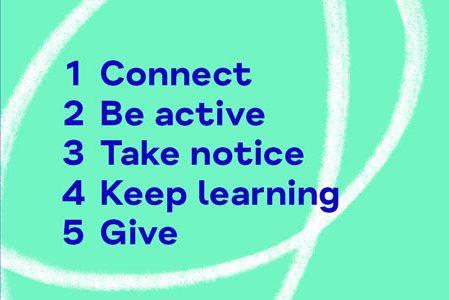
The Five Ways to Wellbeing is a set of evidence-based actions, developed by New Economics Foundation, to help improve mental health and wellbeing.

These five simple actions – connect, keep learning, give, take notice, and be active – are based on research showing that small, everyday changes can make a real difference to how we feel and function.

1. Connect

Connect with people around you. With family, friends, colleagues and neighbours. At home, work, school or in your local community. Think of these as the cornerstones of your life and invest time in developing them. Building these connections will support and enrich you every day.

Having strong relationships with friends, family and those around you can be really good for you and can help to increase your happiness and wellbeing.

Try three practical things:

  • Arrange to meet up with a family member or a friend you haven’t seen for a while
  • Ask someone how their weekend was – and really listen when they tell you
  • If you know someone who lives abroad or far away, send them a text or an email to see how they are.

2. Be active

Go for a walk or run. Step outside. Cycle. Play a game. Garden. Dance. Exercising makes you feel good. Most importantly, discover a physical activity you enjoy; one that suits your level of mobility and fitness.

Even just a small amount of activity can have a positive impact on your health and wellbeing. Everyone’s circumstances are different, so try to find something that suits your situation and lifestyle. Remember to build up gradually and don’t try too much too soon.

Try three practical things:

  • Get off the bus, train or tube one stop earlier and walk to your destination
  • Does your workplace have any activities you could take part in such as a running club or lunch time yoga?
  • Put on your favourite piece of music and dance.

3. Take notice

Be curious. Catch sight of the beautiful. Remark on the unusual. Notice the changing seasons. Savour the moment, whether you are on a train, eating lunch or talking to friends. Be aware of the world around you and what you are feeling. Reflecting on your experiences will help you appreciate what matters to you.

Many people find that mindfulness can reduce their stress, anxiety or depression. A key part of mindfulness is paying greater attention to the world around us and living more in the present moment.

Try three practical things:

  • Buy a plant for home or work and nurture it
  • Try something new to eat and really concentrate on enjoying the taste
  • Download an app or read a book about mindfulness and try a breathing exercise.

4. Keep learning

Try something new. Rediscover an old interest. Sign up for that course. Take on a different responsibility at work. Fix a bike. Learn to play an instrument or how to cook your favourite food. Set a challenge you will enjoy achieving. Learning new things will make you more confident, as well as being fun to do.

Learning something new, or rediscovering a forgotten talent, can help to increase your self-esteem and lift your spirits. It can also help you to make new friends and keep your mind active.

Try three practical things:

  • Find a class on something you’ve always been interested in
  • Make a meal you’ve never tried before
  • Watch a documentary on TV that you wouldn’t normally see – choose something that sounds intriguing.

5. Give

Do something nice for a friend, or a stranger. Thank someone. Smile. Volunteer your time. Join a community group. Look out, as well as in. Seeing yourself, and your happiness, linked to the wider community can be incredibly rewarding and will create connections with the people around you.

Giving can help you feel part of a wider community and more positively about yourself. People who volunteer tend to have better wellbeing than those who don’t. You don’t have to give much time – just an hour every now and then can be a positive step for you.

Five Ways to Wellbeing was devised by New Economics Foundation, 2008. All quotes are taken from this piece of work.

Try three practical things:

  • Say “thank you” to someone, even if it is just for a small thing
  • Find someone that you know is having a tough time and ask how they are
  • Help out at a community event or voluntary group.

Awards